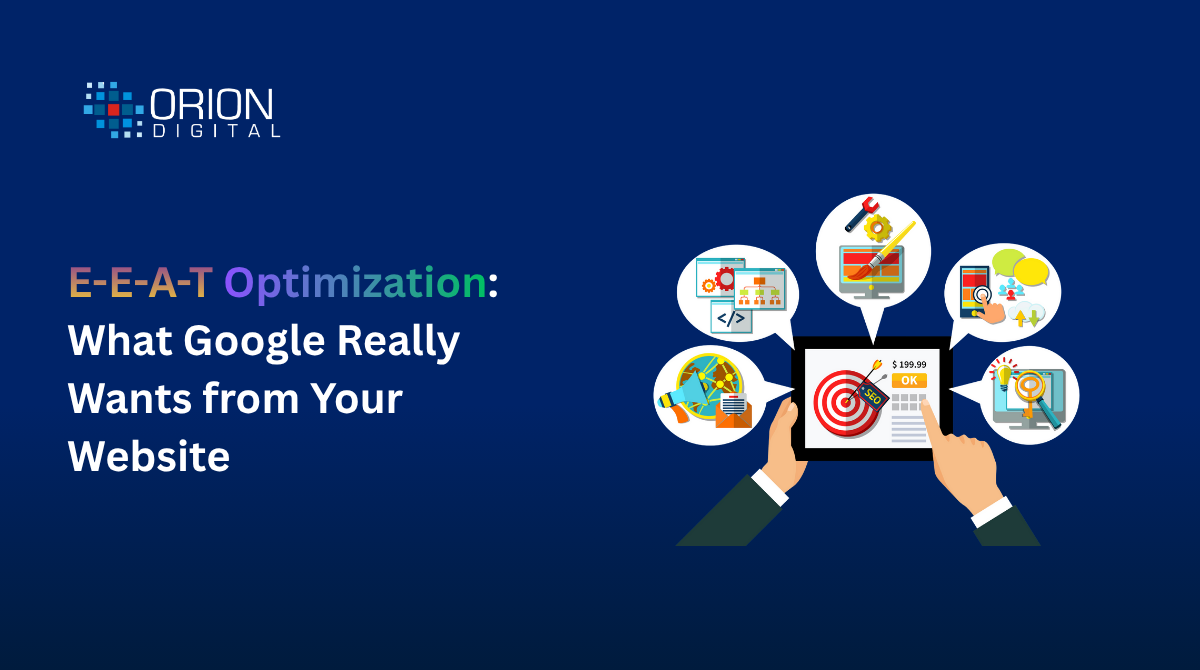
E-E-A-T Optimization: What Google Really Wants from Your Website
- Chitra Rajput
- October 11, 2025
- Digital Marketing
- 0 Comments
You have probably heard the term E-E-A-T thrown around a lot lately if you have kept SEO updates. It has become one of the most important things Google looks for when deciding which websites deserve to rank on top, it’s not a new ranking factor.
But what exactly is E-E-A-T? And how can you make sure your website checks all the right boxes? Let’s break it down in plain, simple terms.
What Is E-E-A-T?
E-E-A-T stands for Experience, Expertise, Authoritativeness and Trustworthiness.
It’s part of Google’s Search Quality Evaluator Guidelines – basically, a rulebook that helps Google’s algorithm (and human reviewers) decide whether your content deserves attention or not.
Here’s what each part means:
– Experience: Have you personally used or experienced what you are talking about?
– Expertise: Are you knowledgeable enough in the topic to give reliable advice or information?
– Authoritativeness: Are you or your website recognized as a credible source in your field?
– Trustworthiness: Can users trust your content, your brand and your website overall?
In short, Google wants content that feels real, credible and helpful – not just written to rank.
Why E-E-A-T Matters More Than Ever
The internet is full of content, but not all of it is accurate or reliable. With AI-generated text, fake reviews and clickbait everywhere, Google is doubling down on trust and authenticity.
E-E-A-T helps filter out fluff and rewards content that genuinely adds value.
So, if your website looks and feels trustworthy – with real people, real experiences and real expertise – Google is far more likely to push it higher in search results.
How to Optimize Your Website for E-E-A-T
You don’t need fancy SEO tricks. You just need to show Google and users that your website is built by real humans who know what they are talking about.
Here’s how you can do that:
1) Showcase Real Experience
Google now prioritizes first-hand experience. If you are reviewing a product, service or place – talk about your actual experience with it.
For example:
– Add your personal take, photos or examples.
– Share results or learnings from using something.
– If you are in a professional field, include case studies or client success stories.
This shows Google and readers that your content comes from someone who’s been there – not just rewriting what others have said.
2) Highlight Author Info
Make sure every blog or article has a visible author bio. Include details like:
– Full name
– Relevant background or expertise
– Links to professional profiles (like LinkedIn)
If readers can see who wrote the piece – and that the person actually knows the topic – it instantly boosts credibility.
For sensitive topics like health, finance or legal advice, author transparency is even more critical.
3) Strengthen Your “About” Page
Your “About” page is more powerful than most people think. It’s not just about your story – it’s a trust-building tool.
Tell visitors:
– Who you are
– Why you started the brand or website
– What makes you credible in your field
Add awards, certifications or media mentions if you have them. These small details help establish authority.
4) Use Reliable Sources
Back your claims with data and citations. Link to credible sources like government sites, research papers or well-known publications.
This not only helps readers trust your content but also signals to Google that you’re connected to trustworthy information ecosystems.
5) Encourage Real Reviews and Mentions
Your online reputation plays a big part in Google’s understanding of your authority.
– Encourage happy customers to leave genuine reviews.
– Respond to feedback – both positive and negative.
– Get featured or mentioned on reputable sites in your industry.
These real-world signals add weight to your brand’s online credibility.
6) Keep Content Updated
Google loves fresh, accurate information. If your content has old data or outdated advice, it can hurt your trust factor.
Set a routine to:
– Review old articles every few months.
– Update stats, links, and examples.
– Add a “Last Updated” tag – it tells users your info is current.
7) Build a Secure and User-Friendly Website
Trust isn’t just about words – it’s also about how safe and reliable your site feels.
– Use HTTPS for security.
– Avoid intrusive pop-ups or misleading ads.
– Make your site fast, mobile-friendly, and easy to navigate.
If users feel safe and comfortable browsing, that’s a direct trust signal for Google.
How Google Measures E-E-A-T
Here’s the thing – E-E-A-T isn’t a single metric you can “score.” Google doesn’t assign a number to it. Instead, it looks at signals that reflect credibility and authenticity:
– Who’s publishing the content
– What others (online and offline) say about that website
– The quality and depth of the information
– How users engage with it
In simple words, it’s about your overall reputation and reliability.
Conclusion
E-E-A-T isn’t a quick SEO hack – it’s a mindset shift. It’s about proving to both users and search engines that your website deserves to be trusted.
In 2025 and beyond, Google will continue rewarding websites that put real experience, expertise and trust at the center of their content.
So instead of just chasing keywords, focus on building credibility – one page, one article and one honest piece of content at a time.
Because when people trust you, Google will too.
Related Posts